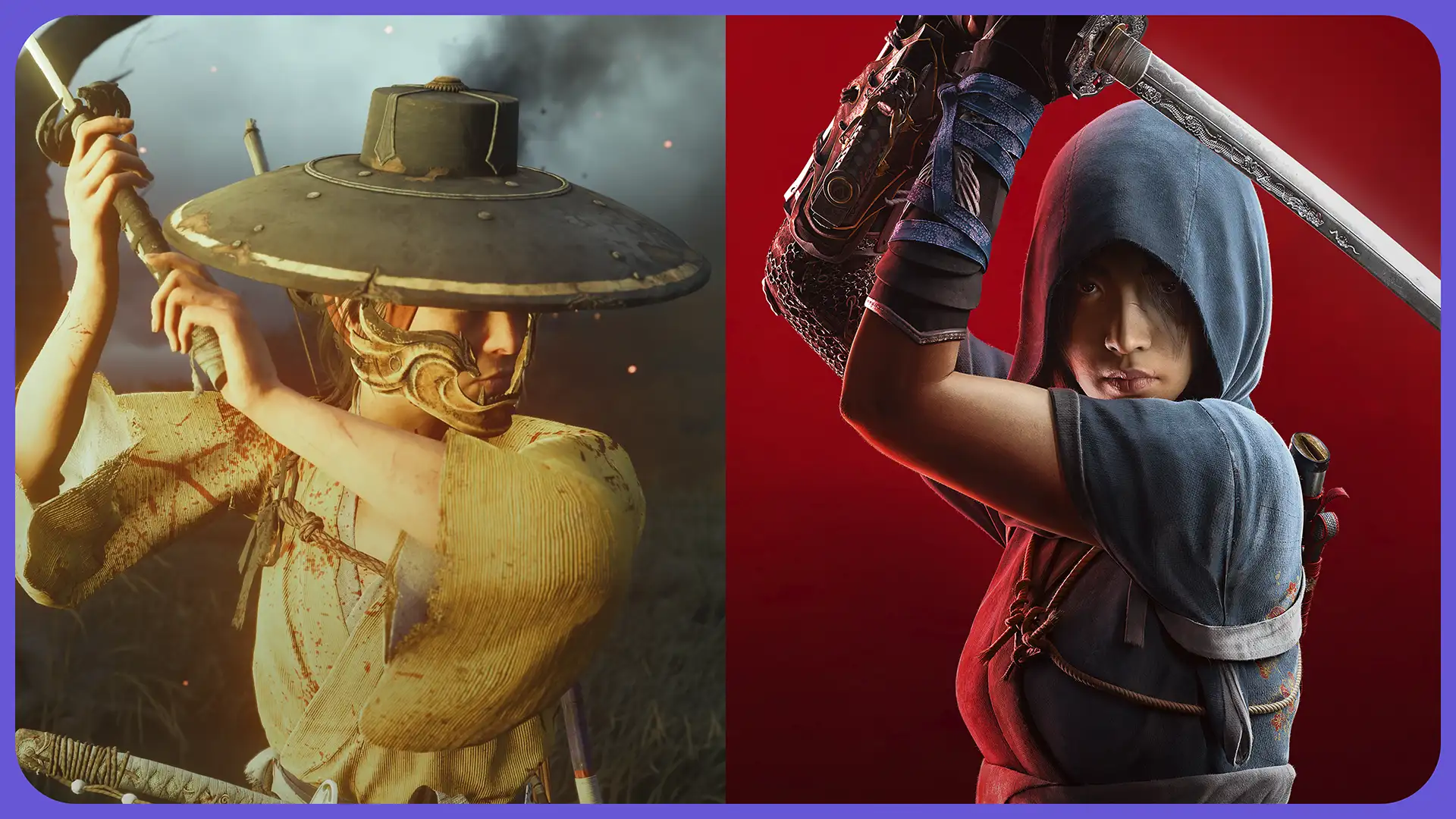
Here’s a question I want you to sit with for just a second. Two open-world games. Both set in feudal Japan. Both big budget. Both with a lot riding on them. Both released within months of each other. And yet — one of them felt like a meal, and the other felt like eating at a buffet until you’re miserable and wondering why you’re still at the buffet.
I’m not here to bury Assassin’s Creed Shadows. I want to be upfront about that. I really enjoyed the game… until I didn’t. It does some genuinely impressive things. But Ghost of Yotei — Sucker Punch’s follow-up to Ghost of Tsushima — did something that’s increasingly rare in the triple-A space. It made me care. Like, actually care. About the character, about the world, about what I was doing and why.
And I think it’s worth talking about why that happened. Because the lessons buried in the gap between these two games say a lot about where big-budget game design is, where it’s been, and where it could go.
So let’s skip the fluff, let’s get to the good stuff.
Before I get into the meat of this, let me give you a quick lay of the land, because context matters here.
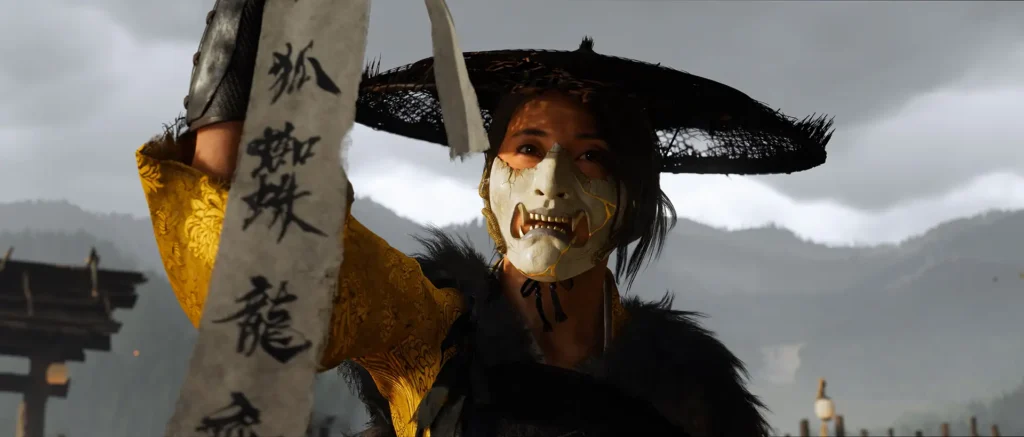
Ghost of Yotei launched in October of 2025, exclusively on PlayStation 5. It’s a standalone sequel to Ghost of Tsushima — meaning you don’t need to have played the first game, though you’ll probably appreciate some of the lore if you did. It’s set about 300 years after the original, in 1603, in Ezo — which is basically what we now call Hokkaido, in northern Japan. You play as Atsu, a mercenary on a mission to hunt down the Yotei Six: a gang of outlaws who slaughtered her family when she was a child.
Ghost of Yotei won Adventure Game of the Year at the D.I.C.E. Awards, and 94% of critics on OpenCritic recommended it. Not bad for a sequel to a game that was already considered one of the best of its generation.
Assassin’s Creed Shadows launched in March of 2025 — also set in feudal Japan — with two playable protagonists: Naoe, a shinobi assassin, and Yasuke, a historical African samurai in the service of Oda Nobunaga. It had more hype, more controversy, more delays, and a whole lot more baggage. It reviewed pretty well — nobody called it a disaster. But the general consensus kind of landed somewhere around “gorgeous game, shame about the story.”
Two games. Same setting. Very different results.
And the thing is, Shadows had more resources, more name recognition, and a franchise with decades of goodwill behind it. So how does Yotei end up feeling more focused, more human, and more worth your time?
That’s what we’re gonna figure out, starting with the one place where games live or die: who you’re playing as.
Because if you don’t care about the person holding the sword — nothing else matters. And Sucker Punch knew that.
The Protagonist Problem
Let’s talk characters. This is where the gap between these two games becomes really clear, really fast. Atsu is a haunted, lean, driven mercenary. She watched her family get slaughtered when she was a kid. Sixteen years later, she’s still carrying that weight. She’s got a wolf companion, sort of. It’s complicated. She moves through the world like someone who has survived things most people haven’t. And critically, she has one goal. One story engine. Revenge.
Now, revenge is not a new story. It’s maybe the oldest story. But what Sucker Punch understood is that simplicity is not a weakness when it’s executed with intention. Atsu’s quest gives the entire game a spine. Every person she meets, every side story she gets pulled into, every moment of unexpected warmth or loss, all of it orbits around that central wound. You always know what drives her. And so when the game asks you to stop and slow down—to play shamisen or paint or help a stranger in a village—it doesn’t feel like filler. It feels like breathing room in someone else’s very real, very difficult life.
Compare that to Naoe and Yasuke in Assassin’s Creed Shadows. On paper, the dual protagonist setup sounds fantastic. An agile shinobi and a hulking samurai—complementary playstyles, different perspectives on the same world. And honestly? For the first several hours, it kind of works. The opening of Shadows is genuinely good. Yasuke’s arc about belonging and perseverance as an outsider in a world that rejects him, is compelling. His story had real potential.
The characters don’t evolve with you, they just wait for you to show up for the next cutscene.
But here’s the problem that critics and players kept running into: in an open world built around non-linear exploration and assassination targets you can tackle in any order, meaningful character development becomes really hard to sustain. The story can’t account for the choices you make, so it doesn’t really try. Yasuke’s potential arc as someone struggling with his morality gets sidelined because the game can’t actually track it. The result is that two actually interesting characters feel wasted on a story that becomes a checklist. The characters don’t evolve with you, they just wait for you to show up for the next cutscene.
Atsu, by contrast, always feels like she’s moving. Her story has momentum. And that momentum carries you.
But a great character alone can’t save a game that loses itself in its own map. And that brings us to the thing Sucker Punch absolutely nailed — and Ubisoft has been fighting against for years: the open world itself.
The Open World Question: Focused vs. Infinite
I want to say something that might sound obvious, but is apparently still controversial in game design circles: Bigger is not always better.
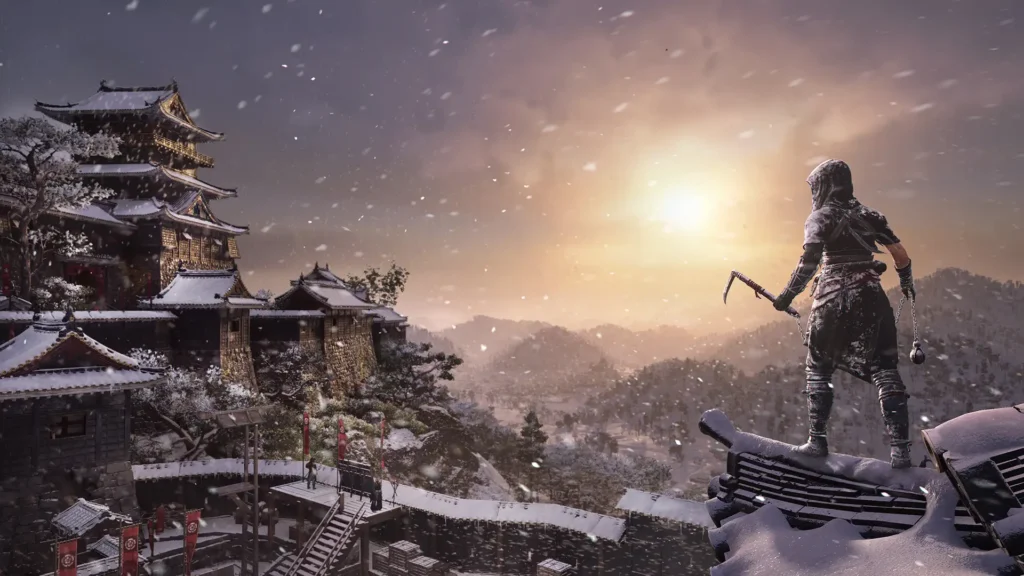
Assassin’s Creed Shadows’ map is enormous. It is genuinely, staggeringly enormous. And for the first twenty or thirty hours, it’s breathtaking. The world is gorgeous. The seasonal changes are beautiful. You can spend hours just galloping through it and appreciating what Ubisoft’s team put together visually.
And then… somewhere around hour forty, you start to feel it. The weight of it. The sameness of it. You’ve synchronised viewpoints. You’ve cleared the camps. You’ve followed the clues to the next target. And you’re doing it again. And again. One reviewer who spent over 100 hours with the game described eventually feeling bored by its exploration long before he’d seen everything—not because it falls into the same traps as older Ubisoft games, but because the world doesn’t give you enough reason to keep exploring it after the novelty wears off. The stuff between points A and B just isn’t interesting enough to justify the distance.
Ghost of Yotei takes a different approach. It’s also a big open world, but it’s built more like a series of rich regions than an endless checklist. The environments around Mount Yotei in northern Japan are distinct and alive.
More importantly, the side content in Yotei is curated in a way that Tsushima wasn’t always, and Shadows rarely was. One of the genuine criticisms of Ghost of Tsushima was that while its character-driven side quests and mythic tales were excellent, the sheer volume of optional tasks eventually became repetitive and the novelty faded. Yotei addressed this directly. There are new activities: shamisen playing, sumi-e painting, bounty hunting, wolf den missions. And the side quests feel more purposefully tied to the world Atsu lives in. They’re not just content, they’re texture.
And here’s the design philosophy difference in a nutshell: in Ghost of Yotei, exploration feels like discovery. In AC Shadows at its worst, exploration feels like maintenance.
That said—and I want to be fair here—Shadows did try to innovate. The investigation system, where you have to follow clues to find your target rather than just chasing a glowing icon on a map, was genuinely clever. It made the world feel more like a world and less like a quest hub. There were good ideas. They just got buried under everything else.
So the world sets the stage. But the thing that actually makes you want to stay in it, the thing that makes you actually feel the combat instead of just executing it, that’s the game design underneath the surface. And this is where Ghost of Yotei’s structure really starts to shine.
Game Design That Serves the Story
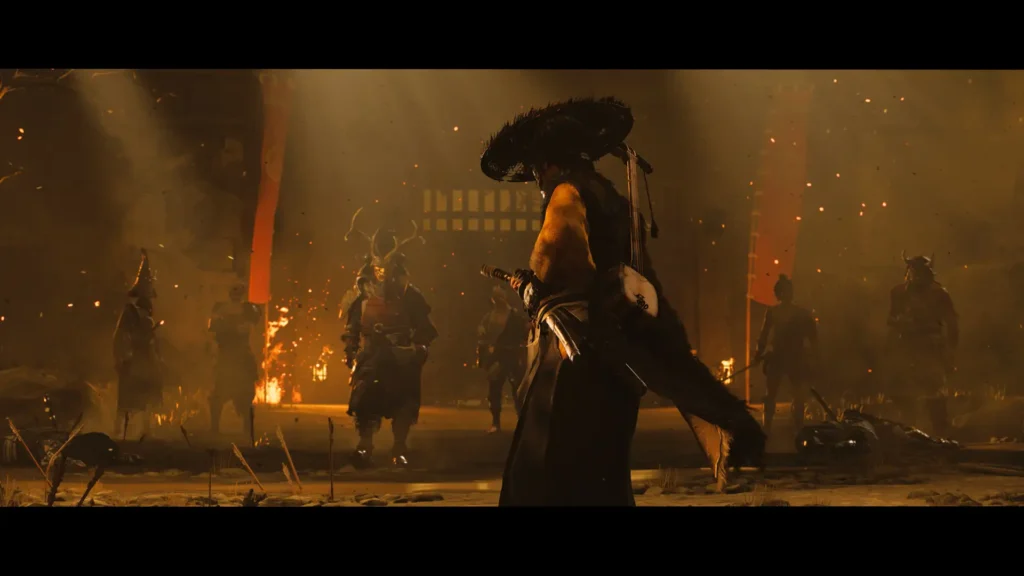
Here’s something Sucker Punch’s creative directors talked about in the lead-up to launch that stuck with me. They wanted Ghost of Yotei to be an origin story, specifically so that the narrative, the gameplay, and the character could all grow together. That’s not a marketing line. You can actually feel it in how the game is designed.
Atsu starts the game as a survivalist. She’s skilled, but she’s lean and scrappy. Over the course of the game, she learns new weapons, and each one is more than a new toy, it’s a new chapter in who she’s becoming. The weapon mastery quests are tied to characters in the world. You learn from masters. The act of getting better at combat is narratively justified. It means something.
Compare this to Assassin’s Creed Shadows’ progression system. Shadows is a diet-RPG, which means loot, leveling, gear scores, and all the complexity that comes with it. And that system doesn’t always serve the story. It can actually work against it. Yasuke’s arc as a powerful warrior gets complicated when the RPG numbers don’t match the story’s version of who he is. One minute you’re watching a cinematic where he’s an unstoppable force—the next you’re grinding to unlock higher skill tiers. But then the enemies scale in power based on your level, anyway, so there’s really no point in progressing. The mechanics and the narrative pull in different directions.
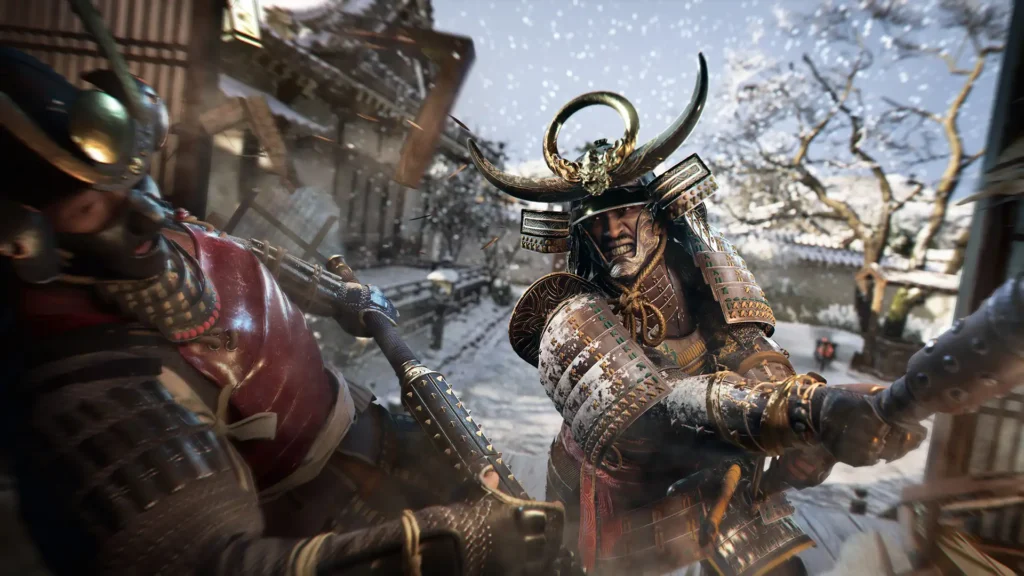
Yotei sidesteps this by keeping its systems legible and story-adjacent. The non-linear structure—where you can hunt the Yotei Six in whatever order you choose—actually works here, because each of the six has a distinct personality, a backstory, and a confrontation that lands differently depending on what you know going in. The Snake is your first target, locked in at the start. Lord Saito is your last. The order of everything in between is up to you. And that freedom feels earned, not algorithmic.
There’s also the wolf, and I love the wolf. You can summon it in combat, use it for stealth missions, and its relationship with Atsu develops quietly over the course of the game. It’s not a gimmick. It’s a companion. And in a game about a lone woman hunting a gang of killers across a brutal northern landscape, having one thing in the world that trusts you completely hits differently than it probably would in a more crowded narrative.
All of this—the character, the world, the systems—ultimately adds up to one thing: whether or not a game makes you feel something. And that brings us to the part of the conversation that I think is the most important and the hardest to quantify. Storytelling.
The Art of the Focused Story
I want to be careful here, because this is the section where I could easily tip over into just bashing Shadows, and that’s not the point and that’s not fair. So let me try to be precise.
Ghost of Yotei tells a fairly conventional revenge story. It’s a well-told story, but not a wildly original one. Atsu’s story works because it’s small enough to be felt. It’s about a woman, her dead family, and six people who need to be held accountable. Everything radiates outward from that. The world is big, but the story is intimate. And that intimacy creates the emotional hook that keeps you invested through thirty, forty, fifty hours of gameplay.
Assassin’s Creed Shadows has the opposite problem. It’s trying to do too many things at once. It’s a story about Naoe and Yasuke. It’s a story about the Assassin Brotherhood. It’s a story about historical Japan and Oda Nobunaga. And it’s trying to layer all of that over a map full of optional content you can complete in any order, which means the story has to constantly pause and wait for you. The narrative momentum never really builds because the game keeps handing you the wheel right when something interesting is about to happen.
Now to be fair, this is a structural problem baked into the kind of game Shadows is trying to be. It’s not a failure of imagination. It’s a tension that every massive open-world RPG faces. And Ubisoft actually tried to address it. The investigation system, the seasonal world, the dual protagonists, these were all attempts to inject meaning into the space between story beats. They just didn’t fully work.
What Sucker Punch did is make a choice. They looked at the scale of their world and asked: what story can this world actually support? And the answer was: a driven, personal story about one person. Not a story about saving the world. Just: she lost her family. She found out who did it. Here we go. That restraint is really hard to pull off. And it’s worth recognizing.
So we’ve got the character, the world design, the gameplay systems, and the storytelling. But all of it relies on one thing holding it together: the sense of place. Because feudal Japan isn’t just a setting in Ghost of Yotei. It’s a character.
Sense of Place—When the World Feels Real
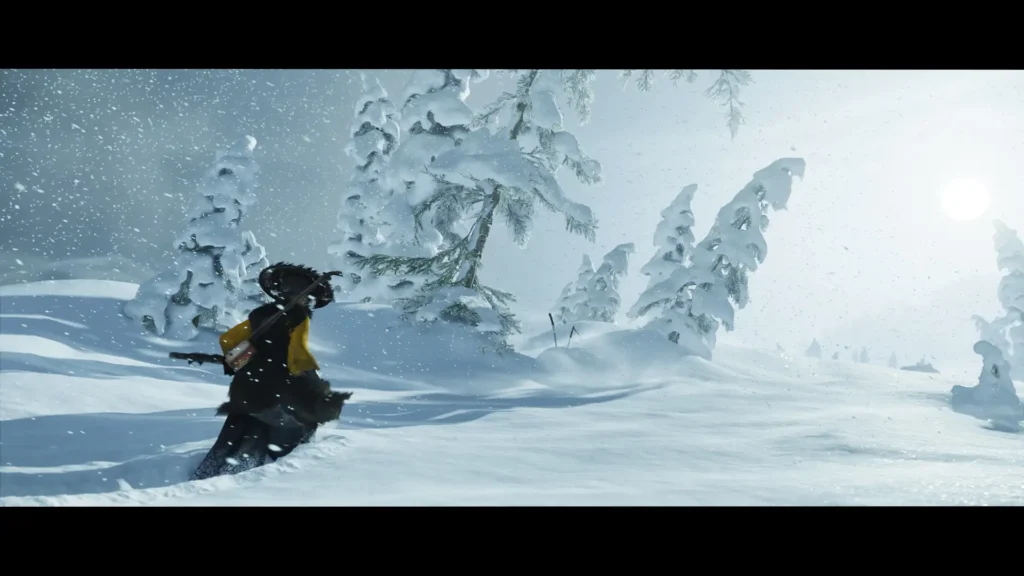
Sucker Punch did something during development that I think explains a lot about why Ghost of Yotei feels the way it feels. They took multiple research trips to Japan. They visited over a dozen locations across northern Hokkaido. They recorded nature sounds on location. They consulted with cultural advisors and with the indigenous people of the region. And when they visited the area around Mount Yotei, they were apparently struck by the sight of the mountain reflecting across Lake Tōya and decided: this is where the game lives.
You can feel all of that in the final product. The world of Ghost of Yotei doesn’t feel like a historical backdrop. It feels like a place that exists and that has existed for a long time before Atsu showed up. The wildlife behaves like wildlife. And the cultural details—the cooking, the music, the ceremonies—feel like research, not decoration.
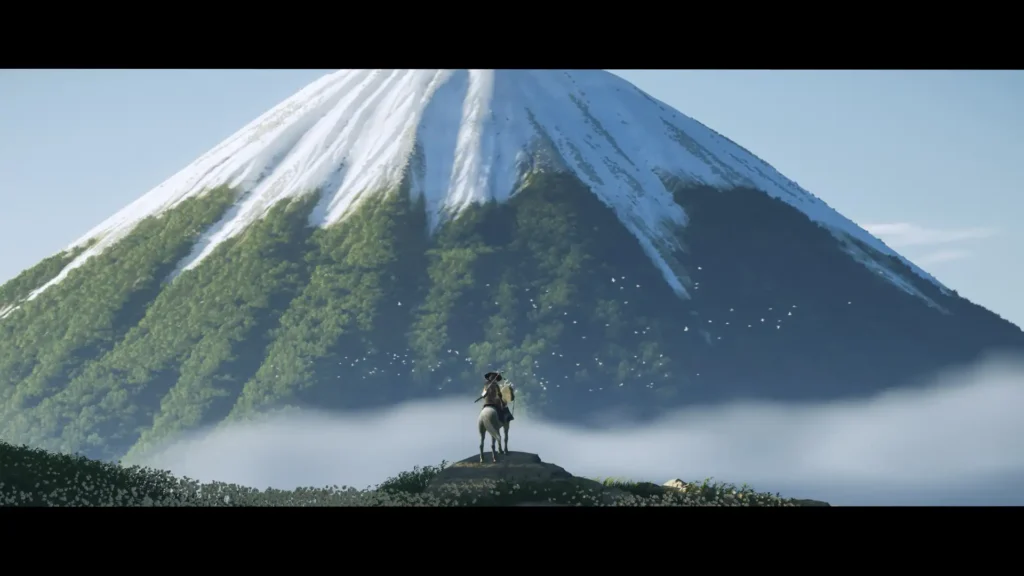
Assassin’s Creed Shadows is also visually stunning. I want to be clear about that. The seasonal transitions in that game are some of the most beautiful I’ve seen in any open world. The architecture, the castles, the temples—Ubisoft’s world-building team is exceptional, and that shows. The problem isn’t the beauty. The problem is the depth beneath it.
The world in Shadows can feel hollow once the novelty wears off. The stuff in the world you find between objectives rarely surprises you or reveals something about the culture in an organic way. It mostly reveals another camp to clear or another collectible to find. You’re just moving through a very pretty screensaver from point to point.
In Yotei, traveling from one place to another is never neutral. You’re always in the world. The weather changes. The wolf reacts to things. And the game consistently frames Atsu against this enormous, indifferent landscape in a way that reinforces the story’s themes — she is small, she is alone, and she is incredibly determined. Every vista is, in a quiet way, a character beat.
So Sucker Punch built a world worth living in and a character worth following through it. But I think the real reason Ghost of Yotei landed the way it did for me is something simpler and more fundamental than any of this. It comes down to what the game decided it was for.
The Philosophy of Purpose—What Is This Game For?
Every game has an implicit answer to the question: what is this for? And the answer shapes every design decision downstream.
For a lot of big Ubisoft open-world games—like Odyssey, Valhalla, and to some extent Shadows—the implicit answer is: this is for exploration and accumulation. It’s a world you can lose hundreds of hours in. It’s a power fantasy built around collecting, upgrading, and gradually mastering a sprawling system. And there is a completely legitimate audience for that. A lot of people love that loop. I’ve loved it in games before.
But there’s a cost. Because meaning requires focus. It requires saying: this game is for this specific experience, and we’re going to sacrifice scale for depth if we have to.
Ghost of Yotei is for the experience of being Atsu. That’s it. Everything in the game serves that. The combat systems serve it. The world serves it. The side content serves it. The wolf serves it. And because the whole thing is organized around that one human experience, the game has an emotional coherence that a lot of open-world games just don’t.
The map in Yotei is smaller than the one in Shadows, but it’s still massive. This is proof that you don’t have to sacrifice scale to achieve focus. You just have to be ruthless about what you include and why.
So where does all of this leave us? Because I’ve been talking about Yotei getting things right—but I also want to be honest about where it doesn’t quite stick the landing. Because no game is perfect, and a fair conversation requires that.
Yotei’s Real Flaws
Look I’m not here to wave a pom-pom. Let’s be honest, Ghost of Yotei has some issues. Even though the story stays cohesive throughout, there are some pacing issues toward the end of the game.
The side quests, while improved from Tsushima, still have moments that feel like something out of a 360-era open world game. Some of the optional activities are charming in concept but thin in execution. The wolf dens are cool. The shamisen minigame is pleasant. But if you’ve played a lot of these games, you’ll recognize the DNA.
And the story, for all its emotional effectiveness, doesn’t stick every landing. Some of the character reveals feel slightly rushed. And there’s a tonal unevenness in a couple of spots where the world’s grimness and the game’s more peaceful interludes don’t quite harmonize.
What makes Ghost of Yotei work isn’t technical perfection. It’s intentionality.
None of that is disqualifying. But it’s real. Ghost of Yotei is not a perfect game. It’s a very good one that gets the important things right, like character, purpose, world-building, and combat, while leaving some areas a little rough around the edges.
That’s actually fine with me. I’d rather play a game that gets the soul right and fumbles some mechanics than a game that nails every system and leaves me feeling nothing.
And that, honestly, is the whole thesis. What makes Ghost of Yotei work isn’t technical perfection. It’s intentionality. It’s a studio that decided, before a single line of code was written, who this game was about and why her story mattered. Let me bring this home.
The Takeaway
Here’s what I think Ghost of Yotei actually proves, beyond the comparison to Assassin’s Creed Shadows. It proves that you can still make a big-budget single-player open-world action game with a focused story, a singular protagonist, and a clear emotional purpose—and have it be a commercial and critical success. Over 4 million copies sold. DICE Award winner. 94% critic recommendation rate. That’s not a niche result. That’s a game that landed.
At a time when the industry is drowning in live service games, bloated RPGs, and sequels chasing the shadows of their predecessors, Sucker Punch made something that felt like a commitment. Ghost of Yotei said: here is a woman with a painful past and a clear mission, here is a mountain, here is the snow falling on northern Japan in 1603, and here is why any of it matters.
Assassin’s Creed Shadows said: here is everything we’ve got, here is the map, here are the icons, here are the systems, good luck.
And both of those approaches have their audience. I’m not pretending otherwise. But one of them left me thinking about a fictional mercenary named Atsu for days after the credits rolled, and the other left me wondering if I should’ve gone to sleep earlier.
That’s the difference.
Ghost of Yotei got it right. Not perfectly. But it nailed the things that matter most. And in this industry, in this moment, that’s worth celebrating.
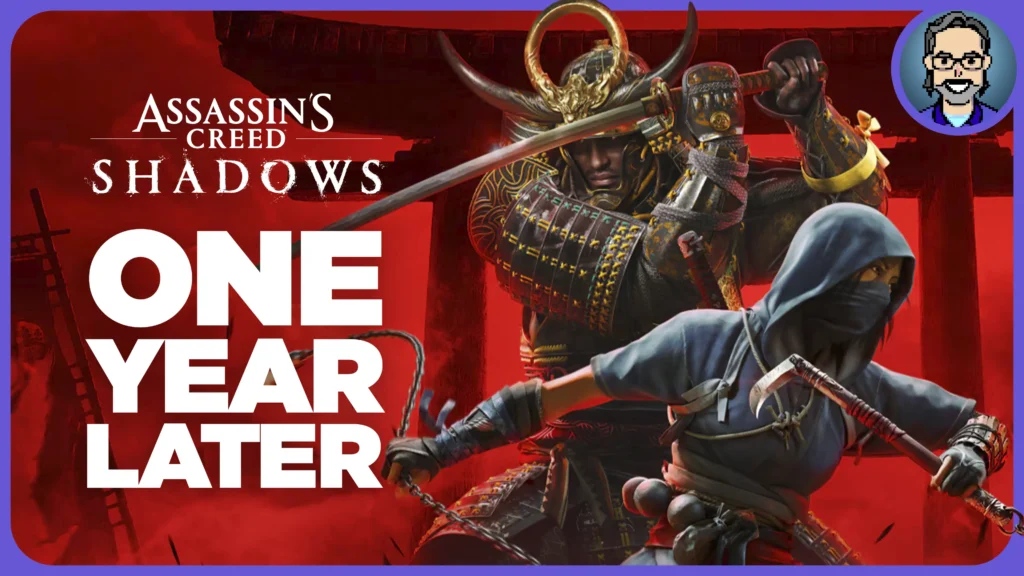
Check out my review on Assassin’s Creed Shadows by itself, I actually like it a little bit more than what this article would probably indicate. It just didn’t stand up to Ghost of Yotei in my eyes, because I was more interested in the story and the characters than just an endless open world.