Video transcription:
Here’s a question that nobody seems to be asking. What if the thing killing Call of Duty isn’t bad developers, or bad map design, or even bad marketing? What if it’s a free mobile game that most console players have never even touched?
Call of Duty Mobile launched in 2019, and since then has pulled in over 650 million downloads and somewhere north of $1.7 billion in revenue from in-app purchases alone. And machines like that have a way of shaping everything around them.
So today we’re going to dig into something that I think is underexplored: how CoD Mobile has influenced and maybe infected the mainline franchise, because the numbers on console and PC are not pretty right now, and I think mobile has something to do with it. Hear me out.
Let’s start with where Call of Duty actually stands right now.
You go back to Black Ops 6, which launched in late 2024, and by any surface level read it should have been a win. It was day one on Game Pass, which theoretically put it in front of millions of subscribers overnight. Player counts jumped at launch and then, like clockwork, they fell off a cliff.

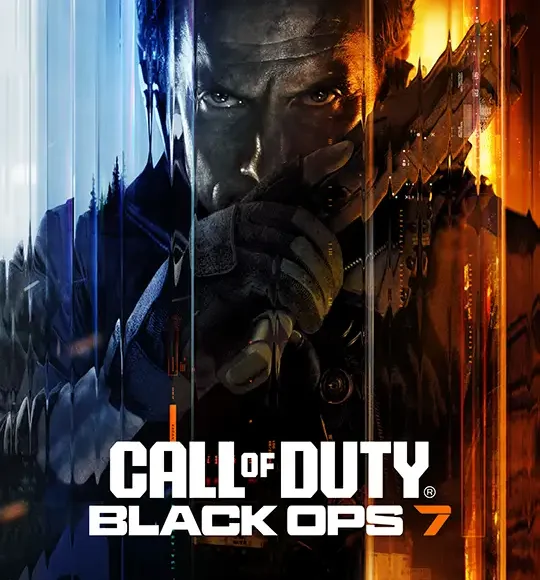
Steam peaks that used to clear 300,000 were barely hitting 60,000 at certain points. Then Black Ops 7 came out and things got worse. Steam sales were something like a sixth of what Black Ops 6 managed in the same window. Daily active users across all platforms declined from 36 million in December 2024 to around 18 million by the end of 2025.
So what’s going on? The short answer, according to analysts, is a combination of community burnout, questionable creative decisions and strong competition. Battlefield 6 came swinging this year, and at launch, it wasn’t even close.
But burnout doesn’t happen in a vacuum. Players don’t just get tired of a franchise for no reason. Something has to erode the experience, and I think if you look closely at what CoD has become, you can see Mobile’s fingerprints all over it.
WHAT COD MOBILE ACTUALLY IS
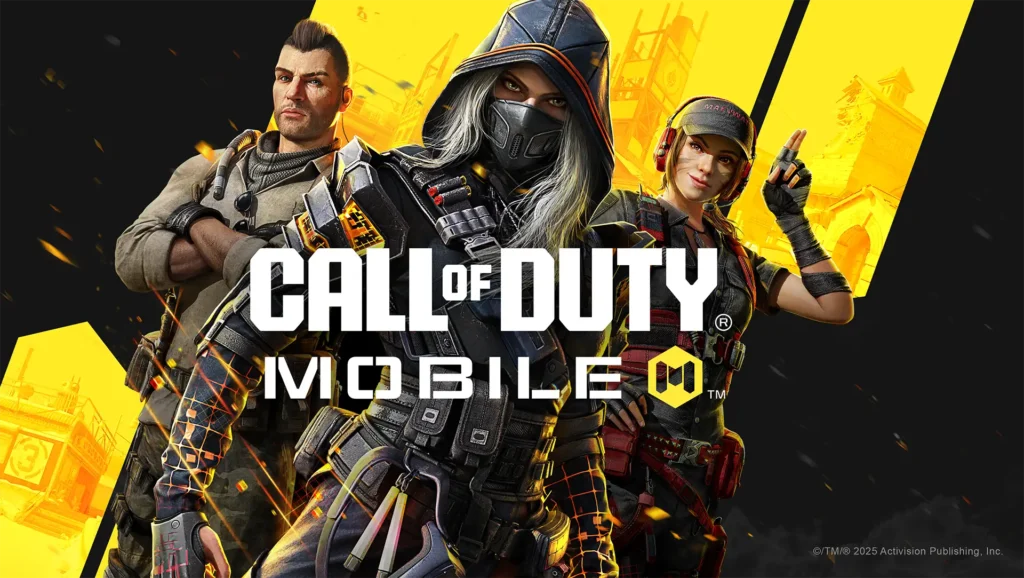
To be fair to the mobile game, and I want to be because it deserves some credit. Call of Duty Mobile is not a bad product. It’s well-made, surprisingly smooth to play, and for a free mobile shooter, it punches well above its weight.
It was built by TiMi Studio Group, a division of Tencent, and they clearly understand how to make a mobile game that retains players. The session loops are tight, the content cadence is relentless, and the monetization, while aggressive, is at least somewhat transparent. You’ve got a Battle Pass, a store full of weapons and skins, loot crate systems, and limited time events designed to pull you back in every few weeks.
The community around CoD Mobile actually tends to defend its Battle Pass as one of the fairer deals in mobile gaming. You can earn currency through gameplay, and the pass offers real value at a low price point. Fine. No serious argument there. But the game was designed from the ground up as a free to play mobile experience. That means the entire skeleton of the game, every design decision, every UI element exists in service of retention and monetization. That’s just what mobile games are. That’s the genre.
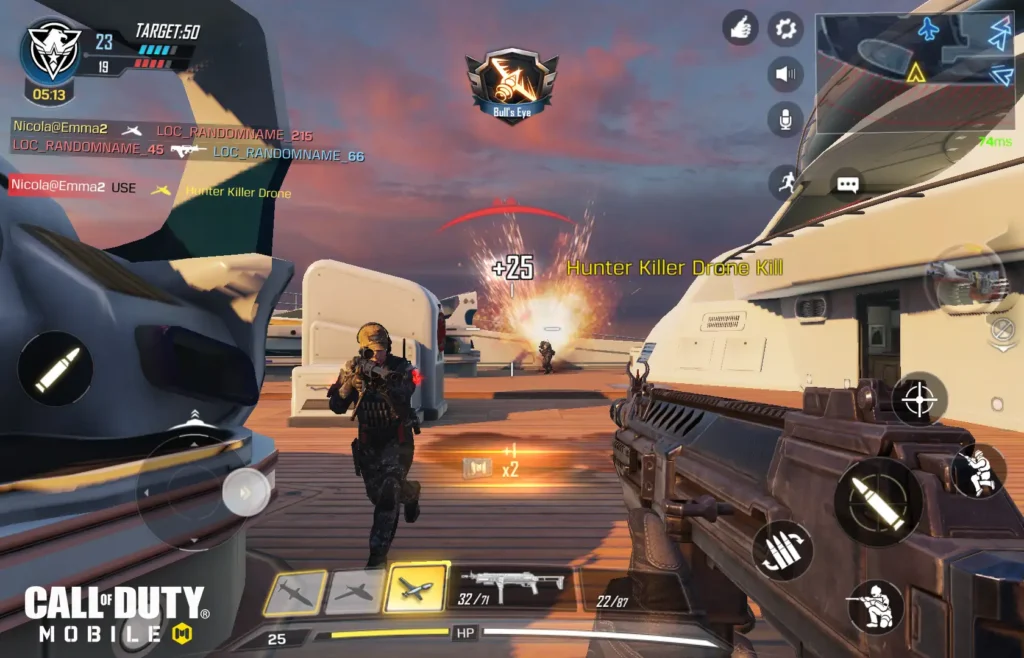
The question is, what happens if you take that skeleton and start transplanting pieces of it into a $70 console game?
THE MONETIZATION PIPELINE
Call of Duty introduced battle passes to the mainline franchise in 2019 with Modern Warfare. That same year, CoD Mobile launched with the same system already baked in. Now, which one influenced the other? Honestly, it was probably a parallel development. Fortnite had already proven the model worked, but the timing matters because from that point on, the philosophy started converging.
Look at what modern Call of Duty looks like today. You’ve got a Battle Pass, you’ve got a rotating store with limited time bundles, $20, $30, sometimes more for weapon blueprints and operator skins. You’ve got loot adjacent systems, seasonal FOMO mechanics, and an in-game storefront that’s arguably more polished and more prominent than the game itself.
There are weapons in those bundles that are functionally competitive, not always pay to win in a strict sense, but blueprints that come with tuning and attachments preloaded, giving you a shortcut that free players grind for.
Sound familiar? It should because the mobile game was a testing ground, or maybe the permission slip for bringing this level of monetization into a game people paid $70 to buy.
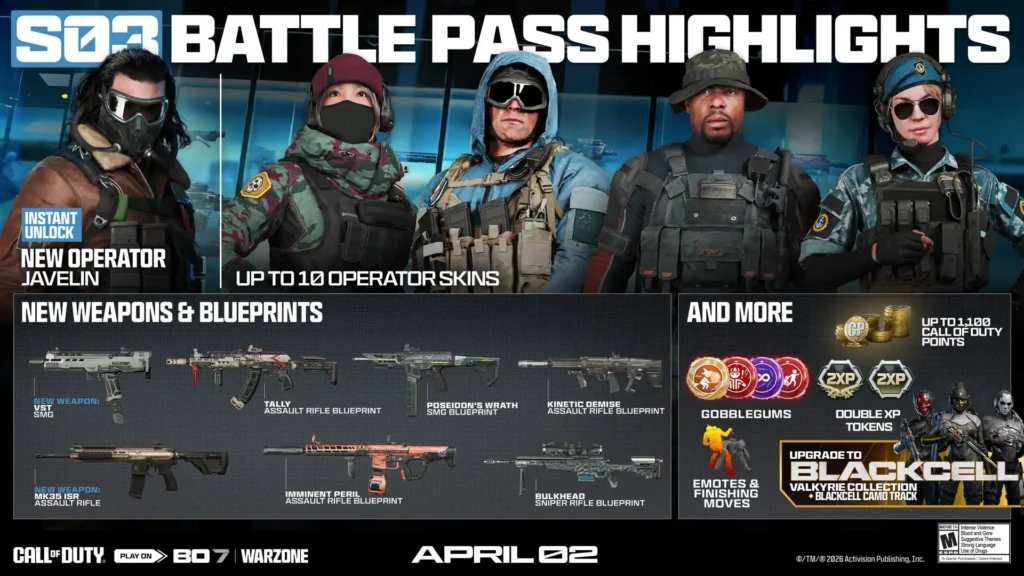
And here’s where I think the real damage happens. Mobile games train players to accept this stuff because mobile games are free. There’s an implicit contract. You get the game for nothing, and in exchange, the developer monetizes your attention and your impulse purchases. That’s reasonable. That’s the deal. “Makes total sense.”
But console Call of Duty costs $70 or more, and then it asks you to engage with the exact same monetization philosophy. You’ve already paid, the house already got paid, and yet there’s a store in your face every time you load up with a rotating ticker of stuff you don’t have.
ENGAGEMENT OVER ENJOYMENT
There is a term game designers use, engagement optimized matchmaking, or EOMM. The idea is that the game’s matchmaking system isn’t just trying to give you a fair fight, it’s using an algorithm to manage your experience, to keep you playing as long as possible. Give the player a few wins to feel good, then calibrate them into a tougher lobby to create tension. Then ease off again. It’s a loop designed not around fun, but around engagement.
Players in the Call of Duty community have been talking about this for years. I mean, I have a video on it and I think it explains EOMM and its roots in casino games really well. The complaint sounds like tinfoil hat stuff, until you realize that engagement optimization is literally standard practice in mobile gaming, where session length and daily active users are the metrics everything is measured against.
And it’s not just matchmaking. Look at how mainline Call of Duty has structured progression since Modern Warfare 2019. You’re not just playing to get better, you’re playing to complete challenges, unlock battle pass tiers, hit prestige milestones, fill out weapon mastery camos. There’s always something incomplete on your screen. Always a bar that isn’t full. That’s not a coincidence. That’s mobile game design ported directly to a console experience.
Now, none of this is evil, exactly. But it does mean the game is optimized for time in game rather than quality of time in game. And I think players feel that even when they can’t articulate it. Something feels off. The game is asking something of you. There’s friction, and over time that friction becomes burnout.

IS MOBILE ACTUALLY TO BLAME?
Look, Call of Duty didn’t cause these problems in isolation. Fortnite proved battle passes worked. Warzone proved free to play could work within the franchise. FIFA and NBA2K proved that sports game players would tolerate outrageous in-game stores. Mobile gaming didn’t invent aggressive monetization, it just normalized it at a massive scale.
What Call of Duty Mobile did was prove internally at Activision that the CoD brand could support a game structured entirely around recurring spending. It generated $1.7 billion from in-app purchases. That number lands on a spreadsheet somewhere, and everyone in that meeting room looks at it and thinks, how do we replicate this everywhere?
And so the mobile philosophy doesn’t stay on mobile. It becomes the everything philosophy. The irony is that Call of Duty Mobile is, by most accounts, healthier than mainline Call of Duty right now. It still has a consistent player base. The developer keeps content flowing. The monetization, while aggressive, fits the medium. Meanwhile, the console game, the one that costs $70, is watching as player counts erode, its community burn out, and its competitors eat its lunch.
FINAL THOUGHTS
Call of Duty has been the biggest franchise in gaming for most of the last 20 years. That doesn’t happen by accident. There’s real craft in those games, or there was, and there still is in flashes.
But somewhere along the way, the franchise stopped asking, is this fun? And started asking, does this convert? And I don’t think you can ask those two questions in parallel forever without one of them taking over.
Mobile gaming taught the industry that players will pay repeatedly for a free game, if the game is designed well enough to earn that loyalty. The mistake Call of Duty made was importing the payment systems without importing that lesson. The loyalty has to come first.
If there’s a version of Call of Duty that gets its act together, it probably looks like this: a game that’s designed start to finish to be worth your time before it asks for your money. A game that respects the $70 you already handed over, a game that remembers it’s competing with other ways you could spend your Tuesday night, not just other ways you could spend your 20 bucks on a weapon skin.
That game exists somewhere. They’ve made it before, they know how. Now they just have to decide if it’s worth building again.
The build up for Modern Warfare 4 has been saying all the right things. But they always say what we want to hear in June and July. I can’t get too excited until I see this thing in October.
And look, if you’re the kind of person who thinks about games this way, not just whether they’re fun, but why they are or aren’t, that’s kind of what this channel is all about. So if this video was worth your time, subscribing is how you tell the algorithm you want more of it. I’d appreciate it. See you in the next one.

Check out my earlier video explaining EOMM, or Engagement Optimized Matchmaking, and how it’s used to trick players into playing longer.